Buying & sellingPark City · Deer Valley
A buyer who asks what the property tax will be is asking two questions. The first is the county’s fair market value for that parcel. The second is whether Utah’s primary residential exemption applies. Park City real estate is not one tax area. The exemption is a state rule. The county named on the parcel is the office that applies it.
What the bill is calculated on
The county assessor appraises residential property at 100% of fair market value, as of January 1. Utah Code section 59-2-103 says tangible taxable property is assessed on that value unless the law provides otherwise. The Utah State Tax Commission’s page on residential property describes fair market value as the price the property would sell for on the open market, with similar properties valued in a uniform way. That figure is an appraisal for the tax roll. It is not a list price, and it is not a sold price. Utah does not disclose sold prices, and this note does not print one.
Taxable value is what remains after an exemption. Section 59-2-103 allows a residential exemption equal to a 45% reduction in the fair market value of qualifying residential property. The Tax Commission states the result in one line: taxable value is 55% of fair market value. The same page states the other case. The taxable value of a second residence, or of residential property that is unoccupied, equals 100% of fair market value. The tax rate for the parcel’s tax area is applied to taxable value. The exemption is what changes that taxable value.
Summit County’s assessor FAQ uses the same arithmetic for a property that has been granted the exemption. Market value times 55% is taxable value. Taxable value times the tax rate is the tax due. The exemption covers the home and up to one acre of land. Section 59-2-103 limits that land to one acre per residential unit. Acreage past that acre is taxed at 100% of market value. On the county’s notice, property with the exemption is typed Primary Improved Property. Remaining acreage is typed Non-Primary land.
The rate is not one number for every address a listing calls Park City. The Tax Commission says the counties apply tax rates to taxable value and distribute the money to the local taxing entities. The notice names the tax area. This note does not print a rate, a levy, or a bill for any address.
The Commission’s Publication 27 shows the arithmetic with a round figure that is not a Park City value: a primary residence with a market value of $100,000, a 45% exemption of $45,000, and a taxable value of $55,000. Use it to read the ratio. It is not a value for a house here.
Who the exemption is for
The Tax Commission defines a primary residence, for this exemption, as a dwelling occupied as a primary domicile for at least 183 consecutive days in a calendar year. The occupant can be the owner, or a full-time tenant. One household may claim one primary residential exemption in Utah. Section 59-2-103 defines a household to include married individuals who are not legally separated and who have established domiciles at separate locations within the state. A household that already holds the exemption on another Utah house does not also receive it on a Park City house.
Publication 27 names the uses that fall outside a primary residence: vacation homes, cabins, time-shares, and other transitory housing. The Commission’s exemption page answers the second-home question in those terms. The exemption is for a primary residence occupied for at least 183 consecutive days in the calendar year. A household may claim one exemption in the state.
A loan file that calls the house a second home is the lender’s category. The county’s grant is the filing described here. How the house is used, apart from this tax question, is A Wasatch second home.
Summit County’s primary-residence page states the local line. The exemption is for a Utah-domiciled resident living in the property full time, or for an owner who has rented it year-round to a Utah-domiciled resident tenant. Nightly rentals, short-term rentals, and vacation homes do not qualify. The home must be occupied by the domiciled resident for 183 consecutive days of the calendar year. The county’s FAQ says a rental file usually means a one-year lease, and that meeting the 183-day test and still renting nightly in ski season is often not feasible. The association’s rental rule is a separate document. This note does not restate it.
Summit County requires an application
In Summit County, the exemption is applied after an application. The assessor’s FAQ says you must apply. The county’s primary-residence page says the office processes the applications and the Summit County Council approves them. The assessor’s letter on the published application says all new ownership transfers must apply and qualify. The seller’s exemption does not become the buyer’s by the recording of the deed.
The FAQ says to send the application and the proof of domicile to [email protected]. The assessor’s office is at 60 North Main Street, P.O. Box 128, Coalville, UT 84017. The number on that FAQ is (435) 336-3220. For a full-time rental, the FAQ asks for the current lease, proof of domicile for the tenant, and the application. The county’s filing steps say to put the driver’s license, and any lease, in the same PDF as the application.
The notice of valuation is where the result shows. The treasurer’s 2026 calendar lists July 2026 for the mailing of 2026 valuation notices. The assessor’s FAQ says a notice of property valuation and tax changes is mailed yearly in August, and that the notice states market value, taxable value, and property type. If the notice in your file shows a different month, use that copy. If the type reads non-primary, or if taxable value matches market value, the FAQ says to follow the Board of Equalization instructions printed on the notice, or to call (435) 336-3220.
The 2026 calendar
Summit County’s treasurer publishes this calendar for 2026. Notices of 2026 valuation are listed for July 2026. September 15, 2026 is the deadline for primary residence exemption applications, and the deadline for 2026 market valuation appeals. Tax bills are listed for October 25, 2026. The 2026 property tax is due November 30, 2026. A 1% penalty on unpaid tax is listed for December 1, 2026. January 31, 2027 is the date the treasurer lists for avoiding additional penalties and interest. On February 1, 2027, the treasurer adds a 1.5% penalty, and interest begins to accrue from January 1, 2027. The page does not print the interest rate. This note does not supply one.
The county’s primary-residence page states two rules for an application after September 15. Applications received after that primary appeal deadline are considered for the next calendar year. An owner who qualifies for the current year and misses September 15 may still apply through November 30, and the Treasurer’s Office assesses a $150 processing fee on the property tax bill. Both sentences are on that page. Read them for the year you are filing.
Tax relief is a separate filing. The treasurer’s calendar puts the 2026 tax-relief due date at September 1, and the final date for that documentation at December 31, 2026. That line is not the primary residential exemption. This note does not describe who qualifies for tax relief.
What changes on January 1, 2027
2026 Senate Bill 238 amends Utah Code section 59-2-103.5 effective January 1, 2027. From that date, an owner files an application with the county board of equalization before the county applies the residential exemption when any of three things is true. The property was ineligible for the exemption in the prior calendar year. An ownership interest changes. Or the board determines there is reason to believe the property no longer qualifies.
The Tax Commission says that application is Form TC-473A, that the registered owners sign it, and that a change of ownership includes a purchase, a deed transfer, a trust transfer, or a name update. The statute says the form may not request the sales price, and that the county may not request information beyond the form. The Commission’s answer to a buyer of a house that already had the exemption is that the new owner still files. The prior grant does not follow the sale.
Section 59-2-103.5, as amended, says the board of equalization may not accept an application for the owner’s primary residence filed after the later of two dates: September 15 of that calendar year, or the last day of the 45-day period that begins when the county auditor provides the notice under section 59-2-919.1. The Commission may adopt rules that require a county to accept a later application, and it reports those rules. The Commission’s public page tells owners to file on or before September 15 and says a late application cannot be accepted. A missed filing can leave the property taxed at 100% of market value for that year. This note does not say whether Summit County’s $150 November window remains after January 1, 2027. Use the statute and the county page for the year of the filing.
A house that is still being built has its own declaration under the amended section. The Commission says the owner files Form PT-24, or a county form the Commission has approved, stating that the dwelling will be occupied as a primary residence when it is finished. That filing is not Form TC-473A. A rental used as a tenant’s primary residence needs a declaration signed by the owners. The assessor may ask for the lease, then for the property insurance policy, then for a page of the owner’s most recent federal return that shows rental profit or loss. The statute says the assessor may not ask the tenant.
Part-year residential property has to be used as residential property for 183 or more consecutive days in the year, under section 59-2-103. The amended section 59-2-103.5 requires an application before the county applies the exemption to that property. If the application is filed on or after May 1, the board may require a fee that does not exceed $50.
The county named on the parcel
A mailing address that says Park City does not, by itself, tell you to use Summit County’s form. Deer Valley East is drawn on Wasatch County records. The state exemption is the same statute. The form, the fee, and the calendar belong to the county that assesses the parcel.
Before closing, and when you are selling
Ask for the current notice of valuation. Read market value, taxable value, and the property type. Taxable value at 55% of market value, with the type Primary Improved Property, is how Summit County shows the exemption on the home and the one acre. Taxable value equal to market value means that exemption is not on that figure. The notice is the current owner’s record. It does not grant the exemption to the next owner.
A lender may collect money at closing for property taxes the loan requires. Those figures are on the lender’s papers. The closing costs page describes that collection. It does not set the tax. The exemption, when one is available, is the county filing above.
A seller should put the notice in the listing file and say what the property type reads. Describe a vacation house as a vacation house. The county’s classification is the one on the notice, not a sentence in the remarks.
Active homes are on the listings page. A private note on one address, which is not a tax bill and not a published price, starts at What's my home worth? This note is orientation. It is not tax advice, and it is not a valuation. The facts here were read on October 20, 2026 from the Utah State Tax Commission, Utah Code sections 59-2-103 and 59-2-103.5, enrolled 2026 Senate Bill 238, and Summit County’s assessor, treasurer, and primary-residence pages. For the house in front of you, write [email protected]. Nick Melilli is at (954) 383-1478. Marcie Davis is at (435) 602-9577. Darrick Olsen is at (435) 640-1029. Derek Fossey is at (612) 248-7374.
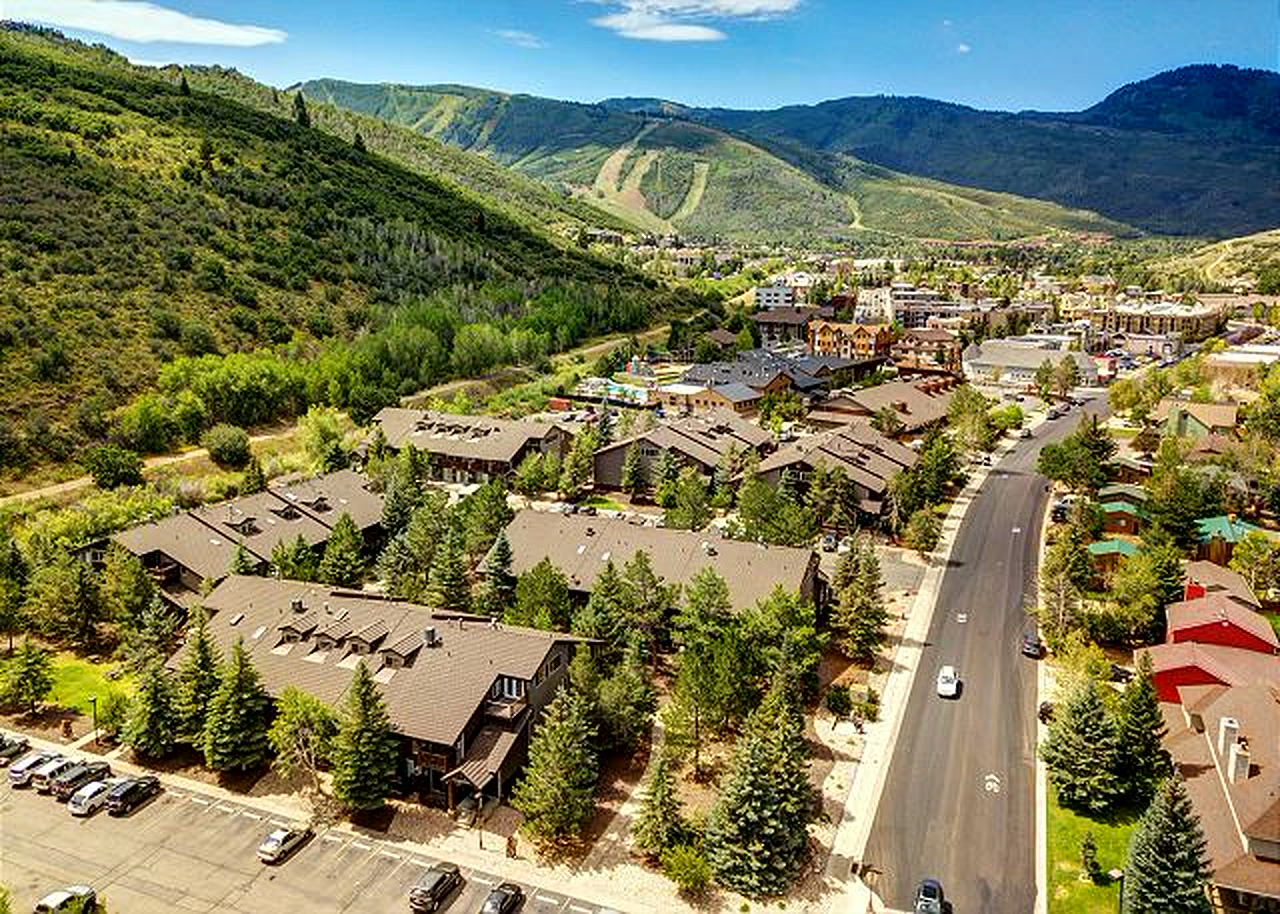
The cover is Park Meadows in fall: houses and the golf course in town. It is the neighborhood, not a parcel’s tax notice, and not a house offered for sale.
Questions
Does a Park City second home receive the 45% exemption?
The Utah State Tax Commission limits the exemption to a primary residence occupied as a primary domicile for at least 183 consecutive days in the calendar year, by the owner or by a full-time tenant. Publication 27 puts vacation homes and other transitory housing outside that definition. Summit County says nightly rentals, short-term rentals, and vacation homes do not qualify. One household may claim one exemption in Utah. Without the exemption, taxable value is 100% of fair market value.
How do you tell whether this parcel has the exemption?
Read the notice of valuation. Summit County’s assessor says a granted exemption is typed Primary Improved Property, with taxable value at 55% of market value for the home and up to one acre. Remaining acreage is Non-Primary land, taxed at 100% of market value. If taxable value equals market value, or the type reads non-primary, the exemption is not on that value.
Does the seller’s exemption transfer at closing?
Summit County says a new ownership transfer must apply and qualify. Beginning January 1, 2027, Utah Code section 59-2-103.5 requires an application when an ownership interest changes. The Tax Commission says a buyer of a house that already had the exemption still files. The Commission tells owners to file on or before September 15. Summit County’s page, as published for the current filing, also describes a November 30 window with a $150 treasurer fee for an owner who qualifies and missed September 15.
Written for this site by Melilli Davis Group. It is orientation, not a valuation and not a club policy. Where a sale is mentioned, Utah non-disclosure means last list price only.
All posts