Buying & sellingPark City · Deer Valley
Park City condos are listed beside houses. The file is not a smaller house. Deer Valley condos are the same kind of file at another base. Park City real estate still has to name the unit, the building, and the city or county on the parcel. The view does not say what the dues pay, what the reserves hold, or whether a nightly rental is allowed.
What the dues cover on Park City condos
The monthly charge is an assessment: a charge the association imposes for common expenses. Utah Code section 57-8-3 defines common expenses to include administration, maintenance, repair, and replacement of the common areas and facilities. The current budget is the list for this building. The lodge next door is not this budget. Look for these lines. The budget either has them or it does not.
- Snow removal on the drives, walks, and roofs the association maintains. Park City’s nightly-rental page says the city does not generally regulate snow removal on private property. At a condo, the budget is the page that says who plows.
- The roof and the exterior, when they are common areas. Section 57-8-3’s default list of common areas includes roofs, lobbies, parking areas, and storage spaces, unless the declaration says otherwise. Section 57-8-7 makes the association responsible for common areas and the unit owner responsible for the unit, unless the declaration or section 57-8-43 says otherwise.
- A shuttle, if this project runs one. A shuttle stop is not a door onto a run.
- Ski lockers or other storage, and whether a locker is assigned to the unit or taken from a shared pool.
- Shared amenities the declaration actually provides, such as a pool, a fitness room, or a lobby. A photograph of the next building does not add an amenity this budget does not pay for.
- The association’s master insurance policy. The certificate says what that policy covers. The policy on the unit is a separate page.
Under section 57-8-43, when a covered loss includes damage to the unit, the owner is responsible for a share of the association’s property-insurance deductible. The share is the percentage of the total damage that is unit damage. If that share is not paid, the association can assess it. The certificate states the deductible. This note does not print the amount.
This note does not estimate dues. The figure is on this budget.
The reserve analysis, and an extra assessment
Utah Code section 57-8-7.5 tells a condominium association to keep a reserve analysis. Unless the declaration sets a different schedule, the management committee has one prepared at least every six years and reviews it at least every three. The analysis lists the components that will need reserve money, the remaining useful life of each, and an estimate of the cost to repair, replace, or restore them. Reserve money under that section is for common areas and facilities with a useful life of three years or more and a remaining useful life of less than 30 years, when the cost cannot reasonably come from the general budget. The association puts a reserve line in the annual budget and gives owners a summary each year. A unit owner can ask for the full analysis.
Read the date on the analysis beside the reserve line in the budget. A roof or a parking structure the analysis puts near the end of its life, next to a thin reserve line, is a question to ask before an offer. Within 45 days after the budget is adopted, owners can veto that reserve line by a 51 percent vote of the voting interests. A low line can be a vote. It is not only an omission. During the period of administrative control, while the declarant is still running the association, that schedule does not apply. The declaration says whether that period is still open.
When the regular budget is not enough, the association can assess owners for the gap. The Utah Department of Commerce describes one case: a disaster the insurance does not fully pay. The minutes of this association show an assessment the owners have already voted, and one that is only being discussed. An assessment at the next building is not this one.
Nightly rental sits in the CC&Rs and in the zoning
The declaration is one file. The city or county that has the parcel is the other. A permission in one file does not erase a prohibition in the other.
Inside Park City, the city’s nightly-rental page defines a nightly rental as the rental of a dwelling unit for less than 30 days. The city licenses that use. The zoning map, not the listing headline, is where you check whether the parcel’s zone allows it. Municipal Code section 4-5-3, which that page cites, says on-street parking for a nightly rental may not obstruct traffic, pedestrians, or public safety. A stall assigned to the unit is a different fact, and it is in the declaration.
A mailing address that says Park City is not the same as Park City city limits. KPCW reported on June 18, 2026, that Summit County code enforcement does not have nightly-rental jurisdiction inside a city limit. The county’s work is the unincorporated land. Deer Valley East is drawn on Wasatch County records, above the Jordanelle. It is not Snow Park, and it is not Silver Lake. Confirm which government names the parcel, then read that government’s rule for a stay under 30 days. This note does not copy an ordinance from the next jurisdiction.
The association can be stricter than the zone. If the recorded rules prohibit a stay under 30 days, a city or county license does not rewrite them.
Who may manage a rental, and which weeks you may use
Read whether this declaration limits who may manage a rental, how long a stay must be, and whether a rental program is required or optional. Some projects name an approved manager. Some leave the choice with the owner. The rental agreement is not the resale packet, and it is not the city’s license.
If a management contract sets the weeks an owner may occupy the unit, those weeks are in the contract. A holiday week already booked to a guest is not an owner week. Hold the dates you need before you describe the unit as free. The seller-side note on that calendar is Selling a Park City home in ski season.
Parking, storage, and pets
Ask what conveys with the unit: a deeded stall, an assigned space, a space in a shared lot, and any storage or ski locker. The declaration or the condominium plat assigns limited common area. A photograph of a garage is not that assignment. The city’s on-street parking rule for a nightly rental does not answer which stall this unit owns.
Pet rules are in the same stack. Read the number, any size limit, and whether a guest’s dog is treated as the owner’s. The building next door is not this rule.
Deer Valley condos use the same stack
Deer Valley condos are the same documents at Silver Lake, Snow Park, or Deer Valley East. The base changes the morning. It does not change the stack: the unit, the association, and any rental program. A townhome can share a wall and still be a different product.
Active listings are on Park City condos for sale. Deer Valley condos for sale is the Deer Valley list. Canyons Village condos for sale is the base village on the Canyons side of Park City Mountain. The shorter note on the unit, the association, and a rental program is Buying a Park City condo. Buying a Deer Valley condo is the Deer Valley note. The townhome note is Park City townhomes for sale.
Documents to request before an offer
Ask the seller for this stack. Utah Code section 57-8-6.1 requires the seller, before closing, to give the buyer the association’s recorded governing documents and a link to the state’s educational materials. The association must give those documents to the seller on request. Section 57-8-17 is the list of records the association keeps for unit owners. Request these pages while the offer is still open.
- The recorded declaration, bylaws, and rules. These are the CC&Rs.
- The current budget and the most recent financial statement.
- The most recent reserve analysis.
- The most recent approved minutes, and management-committee minutes from the previous three calendar years.
- A certificate of insurance for each policy the association holds.
People in this market often call that stack the resale certificate. The name on the cover is not the point. The pages are. A neighbor’s packet is not this one.
When you are the seller
Put that packet in the listing file before the first tour. A buyer who is waiting on the association for the budget, the reserve analysis, and the minutes cannot finish diligence on the week you hoped to be under contract. Request the documents when you decide to list. Section 57-8-6.1 already makes the recorded governing documents yours to deliver before closing.
Say what the rules allow. If a nightly rental is prohibited, do not describe the unit as a rental. If a manager’s contract sets the owner’s weeks, say which weeks a showing can use. The listing sequence is the seller guide.
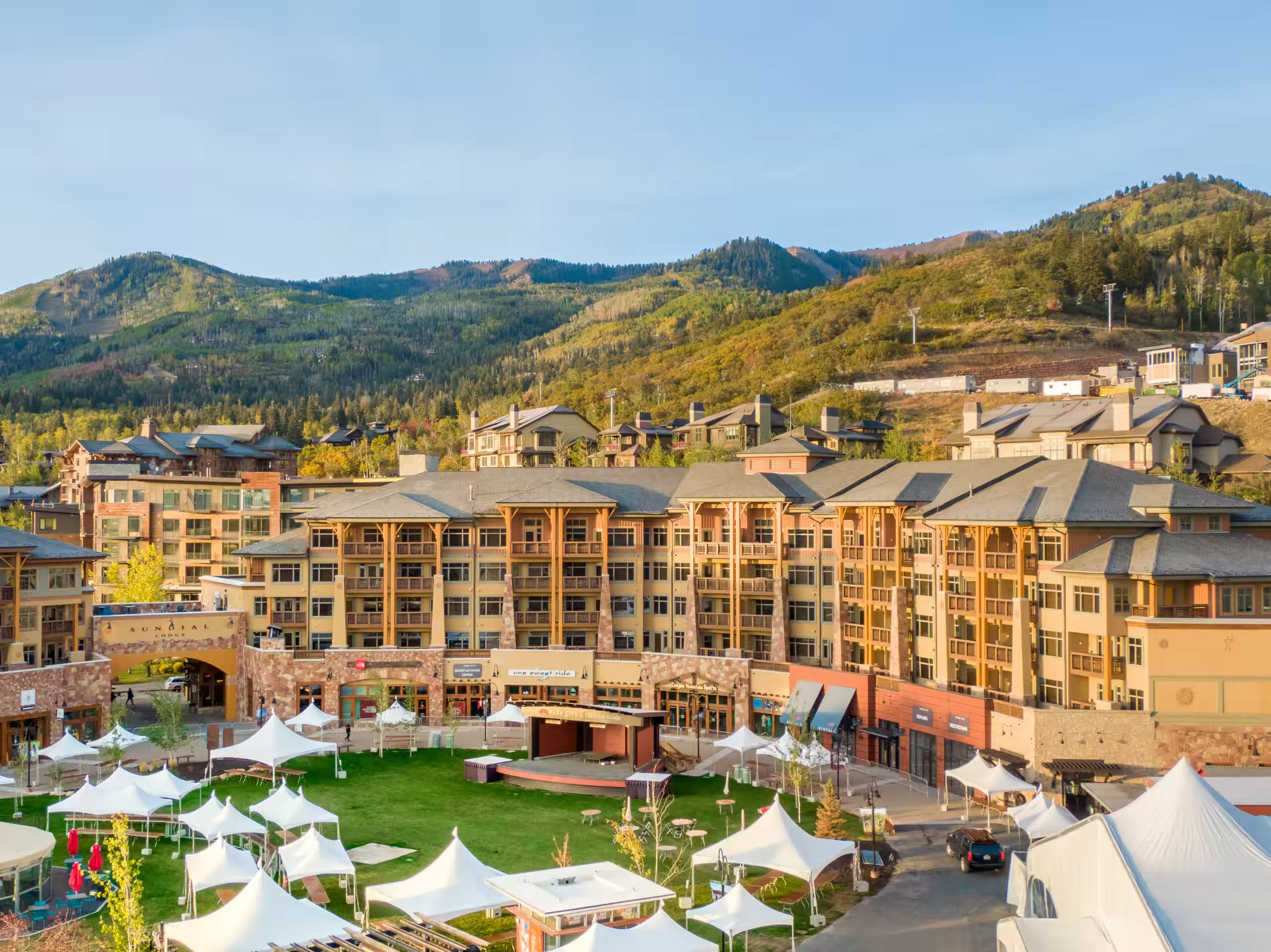
For a question about one unit, use the contact page. The form on the blog is labeled Ask the group. Both go to hello@melillidavis.com. Nick Melilli is at (954) 383-1478. Marcie Davis is at (435) 602-9577. Darrick Olsen is at (435) 640-1029. Derek Fossey is at (612) 248-7374. The cover is Canyons Village in winter, with the gondola and the Waldorf Astoria Park City. It is the village, not a unit offered for sale.
Questions
What do Park City condo dues pay for?
The current budget for that association. Look for snow removal, the roof and exterior, a shuttle, ski storage, shared amenities, and the master insurance policy. The building next door is not that budget. This note does not estimate dues.
Do Deer Valley condos follow a different nightly-rental rule?
They use the same two files. The declaration is one. The city or county on the parcel is the other. Inside Park City, a nightly rental is a dwelling rented for less than 30 days, and the city licenses it where the zone allows it. Deer Valley East is on Wasatch County records, so the public file there is the county’s. A license does not erase a prohibition in the declaration.
Which HOA papers should you collect before an offer?
The recorded declaration and rules, the current budget, the most recent reserve analysis, recent minutes, and the association’s insurance certificates. Utah Code 57-8-6.1 requires the seller to provide the recorded governing documents before closing. Have the rest of the packet ready when you list, so a buyer is not waiting on the association.
Written for this site by Melilli Davis Group. It is orientation, not a valuation and not a club policy. Where a sale is mentioned, Utah non-disclosure means last list price only.
All posts