Buying & sellingPark City · Deer Valley
Lock and leave is a plan for the days you are not in the house. It is not a floor plan, and it is not a resort name. On the Wasatch Back it means someone, or some association, is already named for the exterior, the snow, the pipes, and the key. Park City real estate still has to name the address. When a home is listed, read that card on the listings page. This note does not name a list price.
A Wasatch second home is the calendar: which weeks you are here, who signs, and which rental rule travels with the deed. The ski or second home guide is that wider read. This note is the week you are gone. The property-tax note is a different paper. We do not print a bill.
What lock and leave means here
The phrase is used for a second home you can leave midweek without living as a caretaker. A caretaker, in that sentence, is a person whose job is the house: the drive after a storm, a check of the heat, a call when a sensor trips. A lock-and-leave plan names those tasks. It does not erase them.
Six questions decide whether the phrase fits this address.
- Exterior. Who maintains the roof, the walls, and the walks the public sees? An association budget can name that work when the declaration puts it on the association. A house on its own lot usually keeps it with the owner.
- Snow. Who opens the drive, the walk, and any roof the association maintains? Park City’s nightly-rental page says the city does not generally regulate snow removal on private property. At a condo, the budget is the page that says who plows. At a house, a contract or a person you hire is that page.
- Pipes. Who turns the water down or off when you leave, and who confirms the heat is holding? The name belongs on a page. A neighbor’s habit is not that page.
- Rentals. A guest in the unit is not an empty lock. Read the association rule and any manager contract before you treat the week as yours to leave, or yours to use.
- Keys. Who holds a key, a code, or a lockbox: an owner, a manager, or someone else? Write the name. A code in a listing remark is not a plan.
- Monitoring. A sensor can send an alert. It cannot shut a valve. Ask who answers, and how soon, when the alert fires.
A condo or a townhome is not a house
A condominium can put the common exterior, the common drive, and the common walks on the association. The inside of the unit, including the pipes inside it, can still sit with the owner. Read this declaration. The lodge next door is not it. The longer read is the Park City condo HOA guide. Active condominium cards are on Park City condos for sale.
A townhome can share a wall and still be a different file. Park City townhomes for sale, on this site, are the attached records. The declaration says who maintains the wall, the roof, and the shared drive, and who removes the snow. That answer does not make the home lock-and-leave. It tells you which tasks are already assigned. The townhome note is the longer read.
A managed community can put a contract on a house. The contract is the list: what the manager does, what you still do, and who is called at night. A gate, a village name, or a rental desk in the lobby is not that list.
A free-standing house keeps the roof, the driveway, the walks, and the mechanical room with the owner unless a written contract moves them. You can still leave midweek. You need a local person named for the storm, the heat, and the key. That house is not the same purchase as a village condominium with those tasks in the budget.
A village door and a driveway
Ski-in/ski-out means this door meets snow that connects to a trail. A walk across a plaza and a driveway that needs a car are different mornings. The phrase belongs to the address. The longer notes are Deer Valley ski-in ski-out and Park City ski-in ski-out homes.
Canyons Village is the base village on the Canyons side of Park City Mountain. Some residences are ski-in, ski-out. Some are a walk across the village. Houses farther up the canyon can be a drive back to the village. A condo, a townhome, or a house does not decide that. A lodge name does not decide it. Leaving the unit is a separate question from how you reach the lift. Canyons Village real estate is the map.
Deer Valley real estate is the other mountain. A door in a village at Silver Lake or Snow Park can put snow, walks, and a lobby on an association. A hillside house that drives to the base keeps a driveway in the file. Confirm the door. Do not borrow a ski-in/ski-out line from the building next to the lift.
A driveway house in town is the third morning. The car has to reach the garage after a storm. Someone has to clear that drive. Lock and leave, there, is the name of the person who does it. It is not a sentence copied from a village condominium.
Papers to read before you write
Ask for these pages while the offer is still open. We do not estimate dues. We do not print a tax figure. Utah does not disclose a sold price, and this note does not print one.
- The association packet, when there is an association: the declaration, the budget, the reserves, the insurance certificate, and what that budget maintains.
- The rental rule, and any management contract. If the contract sets the weeks an owner may use, those weeks are in the contract.
- Insurance on the unit or the house, separate from the association’s master policy when there is one. The certificate says what the association covers. Your policy says who is called for the rest.
- The utility accounts that stay on while you are away, and the name on each account.
- A written line for who turns the water down or off, who checks the heat, and who holds the key.
A holiday already booked to a guest is not an empty lock. The seller-side calendar for that week is Selling a Park City home in ski season. If every line for water, heat, and keys is still you, the house is not lock-and-leave. It is a house you still tend.
Before you write an offer
- Walk the door. Is the morning ski-in/ski-out, a village walk, or a driveway?
- Read who maintains the exterior and who removes snow: the association, a manager, or the owner.
- Read who is responsible for pipes and heat inside the unit or the house.
- Read the rental rule before you count on owner weeks. This note does not say what a rental produces.
- Name the person who answers an alert. A sensor without a person is a notification.
- Put the association packet, or the management contract, in the file before you rely on the phrase in the remarks.
If you are selling
Describe lock-and-leave only for the tasks this address already assigns in writing. Say who maintains the exterior, who removes snow, who checks the heat, and who holds the key. If the owner still does that work, say so. Do not borrow the phrase from a condominium in the same village, or from a ski-in/ski-out line on the resort.
If a rental program limits owner weeks, say which weeks a buyer can actually use. Leave dues out of the remarks. Do not print a sold price. Utah does not disclose one.
A private note on one address, which is not a published price, starts at What's my home worth? Selling a home in Park City is the listing page.
To talk through a specific address, use the contact page. Nick Melilli is at (954) 383-1478. Marcie Davis is at (435) 602-9577. Darrick Olsen is at (435) 640-1029. Derek Fossey is at (612) 248-7374. The group mailbox is hello@melillidavis.com. Melilli Davis Group practices with Berkshire Hathaway HomeServices Utah Properties. The person you start with stays with you through closing.
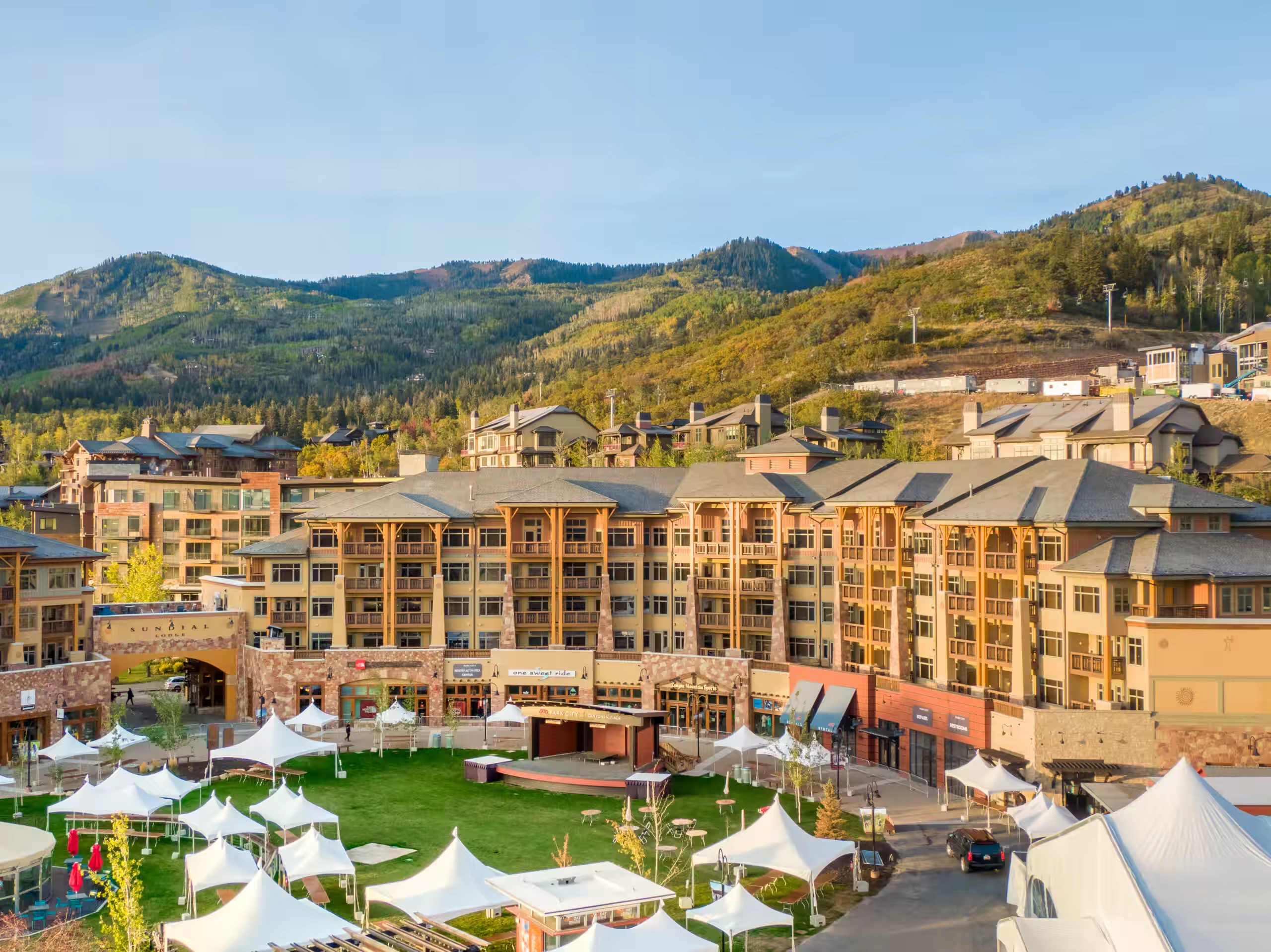
The cover is Canyons Village plaza and lodges in fall, Park City. It is the base village on the Canyons side of Park City Mountain. It is not a driveway house, it is not Deer Valley, and it is not a residence offered for sale.
Questions
What does lock-and-leave mean for a Park City second home?
It means the days you are away already have a written plan: who maintains the exterior, who removes snow, who watches the pipes and the heat, and who holds the key. It is a plan for a second home, not a promise that every Park City address works that way. A sensor is not a person who can shut a valve.
Are Park City condos and townhomes lock-and-leave?
Not from the product name. A condominium often puts common exteriors and common-area snow on the association, and can still leave the inside of the unit with the owner. A townhome’s declaration assigns the wall, the roof, and the shared drive. Read that declaration. A free-standing house usually needs a named local person unless a contract covers the same tasks. This note does not estimate dues.
Does a ski-in/ski-out door at Canyons Village or Deer Valley mean you can leave?
No. Ski-in/ski-out describes how this door meets the snow. Lock-and-leave describes who tends the building while you are gone. At Canyons Village and at Deer Valley, some doors meet a trail, some are a walk through a village, and some houses are a drive. Confirm both facts for the address.
How should a seller describe a lock-and-leave home?
Name the tasks this address assigns in writing: exterior, snow, heat, and keys. If the owner still does that work, say so. Do not copy the phrase from another building, and do not put a dues figure or a sold price in the remarks. Utah does not disclose a sold price. A private note on one address starts at the home value page.
Written for this site by Melilli Davis Group. It is orientation, not a valuation and not a club policy. Where a sale is mentioned, Utah non-disclosure means last list price only.
All posts